
Conductor: Mark Nelson
Pianist: David Almond 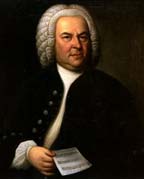
We are an informal group dedicated to the study of J. S. Bach’s cantatas, motets, and Passions. We immerse ourselves in rehearsal of a chosen work for a number of weeks and perform a final run-through at the end of the study period. Founded in 1983 by Joan Snell, the group currently numbers some 50 singers (SATB) and instrumentalists (playing flute, recorder, oboe, violin, viola, cello, and keyboard). We are grateful to the Howe Library in Hanover, which provides rehearsal space and makes possible the borrowing of scores from the Drinker collection of the Philadelphia Free Library.
No Auditions: There are no auditions. Singers and instrumentalists of all levels of experience are most welcome! Interested musicians are encouraged to contact Mark Nelson (mark.bach.study@gmail.com). Non-participating observers are welcome as well.
Rehearsals: Fridays mornings, 10:00 am – 11:45 pm in the Mayer Room of the Howe Library in Hanover, NH.
Weather closings: We do not meet on days on which Hanover schools are closed. BSG members are notified via e-mail about cancelled rehearsals. The Dresden school district Web site—www.sau70.org—includes announcements of school closings.
Listen to Bach
- Emmanuel Music’s Bach Cantata Series runs from September through May. The Cantatas are part of the Sunday liturgy at the 10 AM service at Emmanuel Church at 15 Newbury Street in Boston. All are welcome.
- WGBH in Boston offers online streaming of “all Bach, all the time” at Classical New England’s Bach Channel.
- All of Bach features videos of the Netherlands Bach Society performing Bach’s compositions. Each Friday the site posts a new recording; eventually all of Bach’s works will be available. Recordings are accompanied by background information about both the work and the performers.
- The Oregon Bach Festival’s Digital Bach Project features the B Minor Mass, the Saint Matthew Passion, the Well Tempered Clavier, and the Goldberg Variations. Click on the tab Cuepoints to listen to complete performances of these works; click on the tab Discovery to listen to Helmuth Rilling’s informal lectures on them.
About Bach
- The Bach Cantata Website is a storehouse of information on Bach— recordings, texts and translations, scores, and references
- The IMSLP/Petrucci Music Library offers Bach scores and parts in free downloadable pdf versions.
Librettos and Notes
Librettos with English translations plus Ellen Frye’s conductor’s notes are available as pdf downloads.
- BWV 4 Cantata for Easter Sunday (1707)
- BWV 6 Cantata for Easter Monday (1725)
- BWV 24 Cantata for the Fourth Sunday after Trinity (1723)
- BWV 30 Cantata for John the Baptist Day (1737)
- BWV 33 Cantata for the Thirteenth Sunday after Trinity (1724)
- BWV 34 Cantata for Pentecost (1746)
- BWV 38 Cantata for the Twenty-First Sunday after Trinity (1724)
- BWV 41 Cantata for New Year’s Day (1725)
- BWV 43 Cantata for Ascension (1726)
- BWV 64 Cantata for the Third Day of Christmas (1723)
- BWV 67 Cantata for the First Sunday after Easter (1724)
- BWV 94 Cantata for the Ninth Sunday after Trinity (1724)
- BWV 95 Cantata for the Sixteenth Sunday after Trinity (1723)
- BWV 97 Cantata for Unknown Occasion (1734)
- BWV 99 Cantata for the Fifteenth Sunday after Trinity (1724)
- BWV 101 Cantata for the Tenth Sunday after Trinity (1724)
- BWV 105 Cantata for the Ninth Sunday after Trinity (1723)
- BWV 115 Cantata for the Twenty-second Sunday after Trinity (1724)
- BWV 117 Cantata for Unknown Occasion (1728)
- BWV 119 Cantata for the Inauguration of the Town Council (1723)
- BWV 124 Cantata for the first Sunday after Epiphany (1725)
- BWV 130 Cantata for St. Michael’s Day (1724)
- BWV 134 Cantata for the Third Day of Easter (1719)
- BWV 248 Christmas Oratorio (1734)
BSG history
Provided by Former Conductor, Ellen Frye
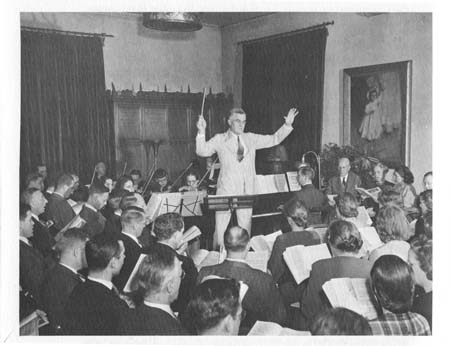
The Bach Study Group through 2016
First, there was the Hanover Women’s Chorus, which began meeting in the winter of
1975 in Hanover’s new Lutheran Church. In the fall of 1976, the trustees of the Howe
Library agreed to let the chorus use the Mayer Room on Tuesday mornings. The chorus
worked on a variety of pieces and gave performances from time to time.
By 1982, the idea of working for concerts gave way to the idea of working on music by
Bach, but not preparing pieces for performance. We began with the St. Matthew Passion,
reasoning that, even if the idea didn’t work, at least the group would have had that
experience. Orchestra parts were purchased, and singers bought (or already owned) their
own scores. The group, still all women, learned the soprano and alto parts of the second
chorus; one Sunday afternoon in November, a quartet of singers was invited to join them
in singing the first chorus. Along with more tenors and basses, as well as instrumentalists,
the group and quartet sang the first half of the Passion. The second half was read through
the spring of the following year.
Over the next two years, the group read through the Christmas Oratorio and the Mass in
B Minor. Since the Oratorio is made up of cantatas and the Mass includes movements
reworked from earlier cantatas, the group decided to sing through all of Bach’s cantatas,
working on one a month and concluding each month with a final run-through on the last
Sunday afternoon. Scores were supplied from the Drinker Choral Library, a musiclending library that is part of the Free Library of Philadelphia. Funds for the library
membership in the Drinker Library came from the generous Hurd Fund, which was
created to encourage interest in music.
Eventually, the Sunday afternoon run-throughs gave way to bringing singers and
instrumentalists together on Tuesday mornings. By the early 1990s, when the group’s
cars were taking over most of the library parking lot, the group changed its meeting time
from Tuesdays to Friday mornings, when the library was otherwise closed.
At the end of the summer of 1999, the group read through the last cantata available from
the Drinker Library (which includes most sacred cantatas for chorus but few solo or
secular cantatas). At that time, the group decided to start the cycle over again, beginning
with cantatas and movements which appear in more than one work; this included a
secular cantata that became a sacred cantata, a short mass, and a cantata with the same
music, and the early cantata movements, which Bach integrated into the Mass in B Minor.
In recent years, the group has been looking more closely at text and context of the
cantatas, including the compositional techniques used to convey Lutheran theology and
the influences of the early German Enlightenment. One summer, thanks to a grant from
The Handel Society Foundation, the group purchased and performed the secular Coffee
Cantata, not available through the Drinker collection.
Although the Drinker editions are in English, more accurate English translations are
provided; before each final run-through, both English and German texts are read, along
with the biblical verses relevant to the cantata.
In 2004, when the Howe Library was under renovation, the Bach Study Group moved to
the new Richard Black Community Center, using the Senior Center room, which is home
to a Steinway grand piano donated by one of the group members. The group stayed on at
the center even after the library renovations were completed, since the new library hours
included Friday mornings and the Bach Study Group had grown large enough to fill all
the available parking spaces at the library. The library continued to support the group by
maintaining its Drinker membership and underwriting the cost of music shipping.
In 2011, more than 35 years after the Women’s Chorus, the Bach Study Group thrives.
While many of its early members have passed on and are missed, new members come,
with weekly attendance averaging 25–35. Instrumentalists include a string section of
violins, violas, cellos, and one viola da gamba. The wind section consists of two oboists,
who also play flute, oboe d’amore, and English horn, a bassoonist, and several recorder
players, who play soprano, alto, and tenor recorders. The singing force is 4–8 sopranos,
8–12 altos, 2–4 tenors, and 6–8 basses. A pianist provides accompaniment. Several
members take responsibility for setting up chairs before the rehearsal and restoring the
room afterwards.
In September 2008, the Bach Study Group returned to the Mayer Room in the Howe
Library. Parking difficulties had been resolved thanks to the new town parking garage,
located on the block across the street from the library. In the first year back at the library,
the group began, as it did 26 years ago, with the St. Matthew Passion.
The philosophy of the group continues to be that anyone who reads music may
participate—no auditions, no attendance records, no polished performances. Visitors are
always welcome to sit in, and anyone may attend the final run-through of the cantata of
the month.
Acknowledgements
- Howe Library, which has supported the group since 1982;
- Jack Stebbins, lawyer and former library trustee, who was behind the original
permission to use the Howe Library Mayer Room for singing; - John Hurd, English professor, who provided the Howe Library with the Hurd Fund
which supports the costs of the library’s Drinker Library membership and of
shipping the cantata scores; - Gen Williamson, who maintains the connection with Drinker Library and takes
responsibility for ordering, receiving, and returning the cantata scores; - Richard Black Community Center, which provided the Senior Center rehearsal
space from 2005 to 2008; - Willy Black, who made the arrangements with the Community Center and keeps
The Bach Study Group in the town’s awareness; - Handel Society Foundation, which underwrote the purchase of the Coffee Cantata;
- Walter Luikart, who provided the literal English translations;
- Joan Snell, who organized the original group and conducted the music through the
first complete cycle of the cantatas; - Ellen Frye, who conducted the music from 1999 to 2016.
In Memoriam - Juanita Almond, double bassist
- Lawrence Almond, bass
- Rachel Aubrey, alto
- Dorothea Babcock, pianist and alto
- Elizabeth Ballard, soprano
- Bob Burgess, violinist
- Ruth Burgess, soprano
- Eleanor Daubenspeck, soprano
- Corinne Davidson
- Nancy Ellison
- Paul Erlich, violinist
- Barbara Hall, pianist, recorder player, and alto
- Ed Hamilton, violist
- Leonard Hanichek, cellist
- Evelyn Hurd, flutist
- Walter Luikart, bass
- Kate MacArthur, alto
- Robin Robinson, tympanist
- Sylvia Shopen, pianist
- Laurie Snell, bass
- Dorothea Stibbitz, alto, who named the group
- John Swogger, trumpeter
- Clay Sykes, soprano
- Harold Van Dusen, bass and brass player
- Vera Vance, soprano
- Rodger Weissman, violin
- Lari Widmayer, alt
 Choral Arts Foundation of the Upper Valley